JudaicaHQ field guide
Buying Tefillin: Parchments, Batim, and Customs
How to choose tefillin: a trustworthy seller, checked parchments, batim grades, family custom, a comfortable fit, and what to ask before ordering.
Published October 18, 2026 · Updated October 30, 2026
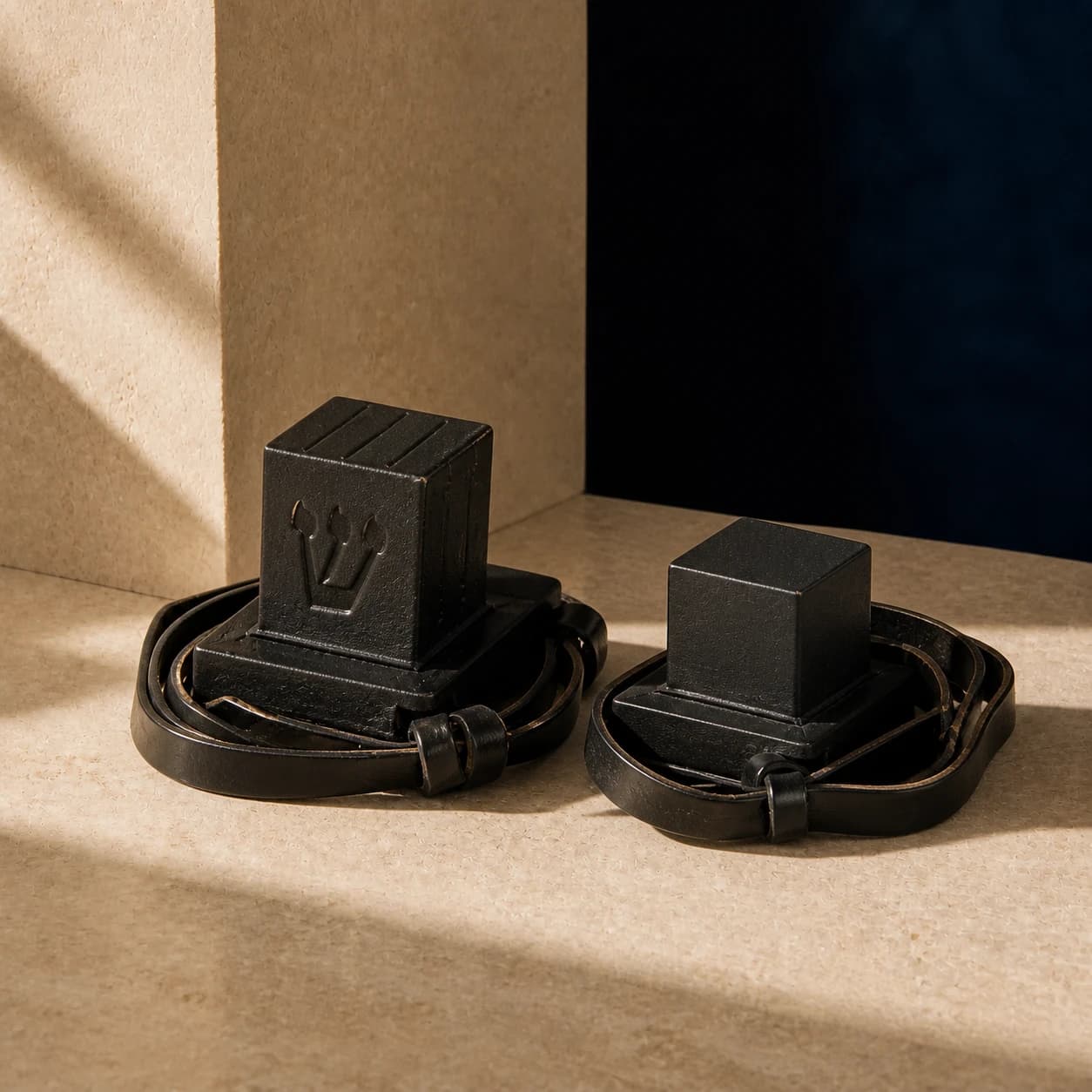
Tefillin are a purchase you may use every weekday for decades. The difficulty is that two pairs can look much the same while differing considerably inside. Start with the people responsible for the parchments and their checking, then choose the boxes, fit, and accessories.
Quick checklist
- Find a reliable sofer or seller. Ask your rabbi for a recommendation if you don't already have one.
- Ask who wrote and checked the parchments. A computer check supplements a trained examiner; it does not replace one.
- Give the seller your family custom. This affects the writing, the arrangement of the text, and the knots.
- Mention left-handedness before ordering. If the wearer uses different hands for different tasks, settle which arm to use first.
- Compare the batim and the parchments separately. A more expensive box does not tell you what is inside it.
- Arrange a fitting. Ask who will adjust the head strap and arm knot and show the wearer how to put them on.
- Confirm the full package and delivery date. Include checking, fitting, protective covers, and any bag or accessories in the comparison.
What you are buying
A set has an arm tefillin (shel yad) and a head tefillin (shel rosh). Each consists of handwritten parchment, a leather box, and a leather strap. The four Torah passages are written on one parchment for the arm and on four separate parchments for the head. The boxes are called batim, the passages parshiyos, and the straps retzuos.[1]
You don't need to become an expert in their manufacture to buy a good pair. You do need a seller who can explain what you are getting and who takes responsibility for the complete set.
Start with the parchments and the people
The parshiyos must be written with the proper intent and in the correct order. Some errors cannot be repaired afterward, and a finished parchment cannot reveal everything about how it was written. This is why the reliability of the sofer, the trained scribe, matters as much as the appearance of the lettering.[2]
Checking requires its own expertise. A magiah is trained to examine the writing for errors and determine whether a problem can be corrected. Training as a sofer does not by itself establish qualification as a magiah; ask who performed the examination.[3]
A useful conversation with the seller covers four things:
- Who wrote the parshiyos, and who checked them?
- What current qualifications do the sofer and magiah hold?
- Who answers their difficult halachic questions?
- Can you arrange an independent examination before accepting the set, and how would any problem be handled?
These questions follow the buying advice in the Ohr Olam series on OU Torah.[4] Ask about the arrangements before buying rather than trying to open the batim yourself afterward.
What a computer check adds
Software can help find missing, extra, or misplaced letters and words. It cannot replace an expert's assessment of the forms of the letters. Look for human examination with computer checking as an additional safeguard, rather than treating “computer checked” as a complete assurance.[5]
Comparing prices
Ask for the specifications behind a quote. Are you comparing the same grade of batim, the same standard of writing, and the same checking arrangements? Does the price include straps, fitting, and protective covers?
If the budget is tight, prioritize reliable, properly checked parshiyos and kosher batim. Beautiful lettering and additional stringencies can add to the price, but they should not come at the expense of basic validity.[6] A seller should be able to distinguish a requirement from an optional enhancement without making you feel that only the most expensive pair is worth buying.
Choosing the batim
The common grades are peshutim, dakkos, and gassos. They describe the construction of the leather boxes, not the quality of the parchments inside.
- Peshutim are the simplest construction, using separate pieces of leather.
- Dakkos use thin leather.
- Gassos use thick leather and are particularly durable and easier to repair.
All three can be kosher. Gassos are the most expensive of these grades, but their durability is worth considering for a pair intended for daily use over many years.[7]
When two gassos sets have very different prices, ask what accounts for the difference. Have the seller identify the batim specification, the writing standard, and any additional hiddurim, or enhancements, separately.
Order for the wearer's custom
Tell the seller whether the family follows Ashkenazi, Sephardi, Chassidic, or Chabad practice. Beis Yosef, Arizal, and Vellish are the main script traditions you will encounter. The customary script is one part of the order; the knots and other details also matter.[8][7]
For a Sephardi buyer, specifying the lettering alone is not enough. The spacing between passages also needs to suit Sephardi practice.[1] Give the seller the family's custom at the outset rather than trying to decide from a photograph or a product name.
If you don't know your family custom, a rabbi can help you establish what to order. For a gift, confirm these details with the recipient or a parent before paying for the set.
Rashi and Rabbeinu Tam
The standard pair is arranged according to Rashi. Some communities also wear a second pair arranged according to Rabbeinu Tam, and the age at which they begin varies.[9] If your family wears both, confirm when the wearer should start and whether the order should include both pairs. Keep them in separate bags so they are easy to distinguish.[9]
Fit, straps, and left-handedness
A left-handed wearer generally puts the arm tefillin on the right arm, with the knot arranged accordingly. Someone who writes with one hand and does other tasks with the other should ask which arm to use before ordering.[7]
Arrange for someone knowledgeable to fit the set to the wearer. Ask the seller to check the head-strap adjustment, the arm knot, and the strap length, and to demonstrate correct placement. For an online order, find out whether this help is available locally.
Choose the size with the wearer and the person doing the fitting. Don't select a pair solely because larger boxes look more substantial, or because a small pair seems easier to pack. The protective covers should fit the chosen batim properly.[7]
The straps must be black on the outward-facing side. Inspect areas that rub or tighten for wear, and ask the seller how to handle a worn patch rather than using ordinary craft paint.[1]
Ordering for a bar mitzvah
Work backward from the date the boy will start wearing tefillin, which may be before the bar mitzvah itself. Customs differ, so confirm the starting date with his rabbi or teacher first.[10]
Then ask the seller for a schedule that includes production or sourcing, checking, delivery, and fitting. Leave room to resolve a problem without rushing. A personalized bag is a nice finishing touch; the tefillin and their preparation come first.
Before paying, get a written description of what is included. Ask about the policy for an independent check, adjustments, repairs, and returns, particularly if any part of the order is personalized.
Checking and care after purchase
Ask the sofer or rabbi who knows your set when it should next be examined. Checking schedules differ for regularly worn tefillin and those used only occasionally, and condition matters too. If they become wet, arrange a prompt examination.[1][11] After a fall or a significant knock, have a qualified sofer assess them.[7]
Keep tefillin dry, at room temperature, and out of direct sunlight. Don't leave them in a car for long periods. Properly fitting covers help protect the batim from knocks and rubbing.[7]
When choosing a seller, ask whether they provide checking and repair services or can refer you to someone who does. That relationship can be useful long after the original purchase.
Where to buy tefillin
Sofrim and STaM specialists are a natural starting point. Ask about the complete set, including the batim and straps, as well as the parchments. General Judaica stores may be convenient for a bar mitzvah order with accessories; ask the same questions about who supplies and checks the tefillin.

Machon Stam
Sofer / STaM · Brooklyn · Online
Crown Heights STaM house selling sifrei Torah, tefillin, and mezuzos written by certified sofrim, alongside Torah accessories such as crowns, mantels, and pointers. Also provides checking services for existing tefillin and mezuzos, and sells online as well as from its Kingston Avenue store.
- Services
- Mezuzah & tefillin checking · WhatsApp orders & inquiries
| Merchant | Price | Where | Services |
|---|---|---|---|
| The Sofer Center | — | Monsey · Online | Mezuzah & tefillin checking, Ships from the U.S., WhatsApp orders & inquiries |
| Baltimore Sofer (Rabbi Moshe Rooshanshad) | — | Online | Mezuzah & tefillin checking |

Judaica Square
Retailer · Lakewood · Online
Judaica and seforim retailer with two large Lakewood stores (River Ave and E County Line Rd) and a full online catalog of seforim, Jewish books, tefillin, tallis, silver, and gifts. Ships US-only with free shipping over $75, offers $7 local delivery across greater Ocean County, and free in-store pickup at both locations.
Ships within the U.S.
- Services
- Local pickup · WhatsApp orders & inquiries

Mezuzah Depot
Sofer / STaM · Airmont
Airmont-based safrus (STa"M) business specializing in tefillin and mezuzahs, offering checking, installation, and repair with house calls throughout Rockland, northern New Jersey, Westchester, and Manhattan; products ship throughout the United States and Canada.
Ships internationally · from the U.S.
- Categories
- Mezuzah & STaMTefillinTallit & Tzitzit
- Services
- Mezuzah & tefillin checking · WhatsApp orders & inquiries
Browse our Tefillin category, or find stores near you for an in-person conversation. Stores are chosen editorially; affiliate relationships do not affect inclusion or order.
For the rest of a bar mitzvah purchase, see choosing a tallis. For another STaM purchase, see buying a kosher mezuzah.
FAQ
Are gassos required? No. Other grades can be kosher. Gassos offer durability and easier repair, which makes them worth considering for daily use.[7]
Can I buy online? Yes. Establish who stands behind the set, who checked the parshiyos, and how fitting and any independent examination will be arranged. The seller's reliability matters more than whether the transaction is online or in a shop.[4]
What should I spend more on first? Secure reliable, checked parshiyos and kosher batim before spending on more beautiful lettering or accessories. Ask the seller to explain what each upgrade adds.[6]
Shops in our directory
A selection of merchants listed under Tefillin, shown in a neutral order, not ranked.
Judaica Eliyahu
Bookseller · Miami · Online
Spanish/English Judaica and Jewish-book store at 2470 NE Miami Gardens Dr, Miami (the site states Sefarad Judaica Inc is now part of the store), selling 800+ book titles (Torah, Kabbalah, philosophy, children's, Hebrew language), tefillin, mezuzahs, tallits, shofars, menorahs and jewelry, with free US shipping over $200.
- Categories
- Seforim & BooksMezuzah & STaMTefillin

Tiferes Stam Judaica
Sofer / STaM · Brooklyn · Online
Flatbush STaM and synagogue-supply house on Coney Island Avenue selling sifrei Torah, tefillin, mezuzahs, Torah covers and mantels, ark curtains (paroches), bima covers, Torah rollers, and silver Torah ornaments, both in-store and through a full online shop. Custom items can be ordered through a quote-request system.
Ships from the U.S.
- Categories
- Mezuzah & STaMTefillinTallit & Tzitzit
- Services
- Custom orders
Mezuza Mehudar
Sofer / STaM · Spring Valley · Online
Rabbi Shea Lindner, a certified sofer since 1993, writes, sells and checks tefillin, mezuzos, sifrei Torah and megillos from Spring Valley, NY; tefillin from $1,090 (Level 1) with a Chabad option.
- Categories
- Mezuzah & STaMTefillin
- Services
- Mezuzah & tefillin checking
HaSOFER STa"M Jerusalem
Sofer / STaM · Jerusalem · Online
Jerusalem STaM house of Moshe Flumenbaum at 9 Straus Street selling tefillin gassot ($920-$3,295) and dakot ($615-$640), mezuzot, megillot, tallitot and shofars; in-stock pairs shipped next business day by DHL, with a US-tariff notice.
Ships internationally · from Israel
- Categories
- Mezuzah & STaMTefillinTallit & Tzitzit
- Services
- Mezuzah & tefillin checking · WhatsApp orders & inquiries
Miami Mezuzah Center
Sofer / STaM · Online
Sofer STaM service run by Rabbi Levi Backman serving Miami-Dade, South Broward, Boca Raton and South Florida: kosher mezuzah scrolls, tefillin (including Bar Mitzvah packages), mezuzah and tefillin checking, home visits, Torah scrolls and megillot, and safrut workshops. Orders and inquiries are by WhatsApp, phone or form; no street address is published.
- Categories
- Mezuzah & STaMTefillin
- Services
- Mezuzah & tefillin checking · WhatsApp orders & inquiries
Aspaclaria Judaica
Retailer · Aventura · Online
Large Judaica store in Aventura, FL (the site describes 2,500 sq ft of display) selling mezuzah covers, ritual Judaica (tallis, kippot, tzitzis, tefillin, tallis and tefillin bags, kittels), Shabbat and holiday items, books, jewelry, toys and Jewish home goods. Offers free nationwide shipping, same-day delivery and pickup in South Florida, and in-store foil stamping and embroidery personalization.
Ships from the U.S.
- Services
- Personalization · Local pickup
Sources
- Halachipedia, "Details About the Tefillin Boxes and Straps"
- Din Online, "Buying Tefillin"
- OU Torah, "The Importance of Haga'ah" (Ohr Olam Mishnah Berurah)
- OU Torah, "Buying Tefillin" (Ohr Olam Mishnah Berurah)
- HaSofer, "Computer Checking of STaM"
- Din Online, "Hiddur of Tefillin"
- Chabad.org, "Purchasing Tefillin: A Buyer's Guide"
- Yeshivat Har Bracha, Revivim (Rabbi Eliezer Melamed)
- Halachipedia, "Rabbenu Tam Tefillin"
- Halachipedia, "Who Is Obligated to Wear Tefillin?"
- Sefaria, Mishnah Berurah 39:26-27